 +91 988 988 5040
 care@nexivf.in
Birth control pills are one of the most common and reliable methods of contraception used by women across the world. But a question many women ask is: “If I take birth control pills for a long time, will it harm my fertility later?”
The short answer is NO — in most cases, it does not.
In this blog, experts at Nex IVF and Fertility Centre explain how birth control pills work, whether long-term use affects fertility, and when you should seek medical advice.
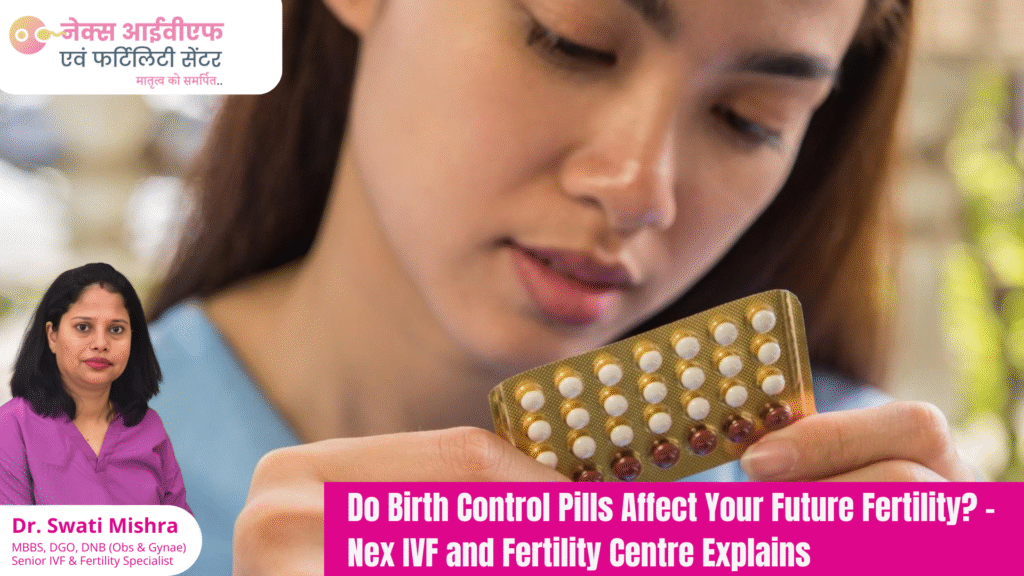
How Do Birth Control Pills Work?
Birth control pills contain synthetic hormones — estrogen, progesterone, or a combination of both. These hormones:
- Stop ovulation (release of an egg)
- Thicken cervical mucus to block sperm
- Make the uterine lining thinner to prevent implantation
Once you stop taking the pill, these effects gradually wear off.
Does Long-Term Use of Birth Control Pills Harm Fertility?
Current scientific research shows that using contraceptive pills for years does NOT cause infertility.
Most women start ovulating again within 1–3 months after stopping the pill. For some, cycles may take a little longer to regulate, but this is temporary.
What You May Experience After Stopping the Pill
- Irregular periods for 1–3 months
- Slight delay in ovulation
- Temporary hormonal imbalance
- Mild acne or mood changes
These changes are normal and reversible.
When Fertility Might Seem Delayed
Sometimes women assume the pill caused infertility, but the real reason is often an underlying condition that was hidden while using birth control.
The pill does not cause these conditions — it only masks their symptoms.
Common underlying issues include:
- PCOS (Polycystic Ovary Syndrome)
- Endometriosis
- Thyroid imbalance
- Low ovarian reserve
- Irregular ovulation
When a woman stops the pill, these conditions may become visible again.
Can Birth Control Pills Benefit Fertility?
Yes — in some situations.
Doctors may prescribe birth control pills to:
- Regulate the menstrual cycle
- Control PCOS symptoms
- Reduce ovarian cysts
- Manage endometriosis pain
By controlling these conditions, pills may actually improve long-term reproductive health.
When to See a Fertility Specialist
Visit a fertility expert if:
- Your period doesn’t return after 3–6 months
- You’re under 35 and haven’t conceived after 1 year of trying
- You’re over 35 and haven’t conceived after 6 months
- You have known conditions like PCOS, endometriosis, or irregular cycles
At Nex IVF and Fertility Centre, we can assess your hormones, ovarian reserve, and ovulation pattern to guide your fertility plan.
Conclusion
Long-term use of birth control pills does not cause infertility. Most women regain normal fertility soon after stopping them. However, underlying reproductive issues — not the pill — may delay conception.