 +91 988 988 5040
 care@nexivf.in
Uterine polyps are more common than many women realize. These small, soft growths inside the uterus often go unnoticed — but in some cases, they can affect menstrual health, fertility, and overall well-being. Understanding whether they are dangerous, how they form, and when to seek medical attention is crucial for every woman.
At Nex IVF and Fertility Centre, we provide clear guidance and accurate diagnosis to help women protect their reproductive health with confidence and clarity.
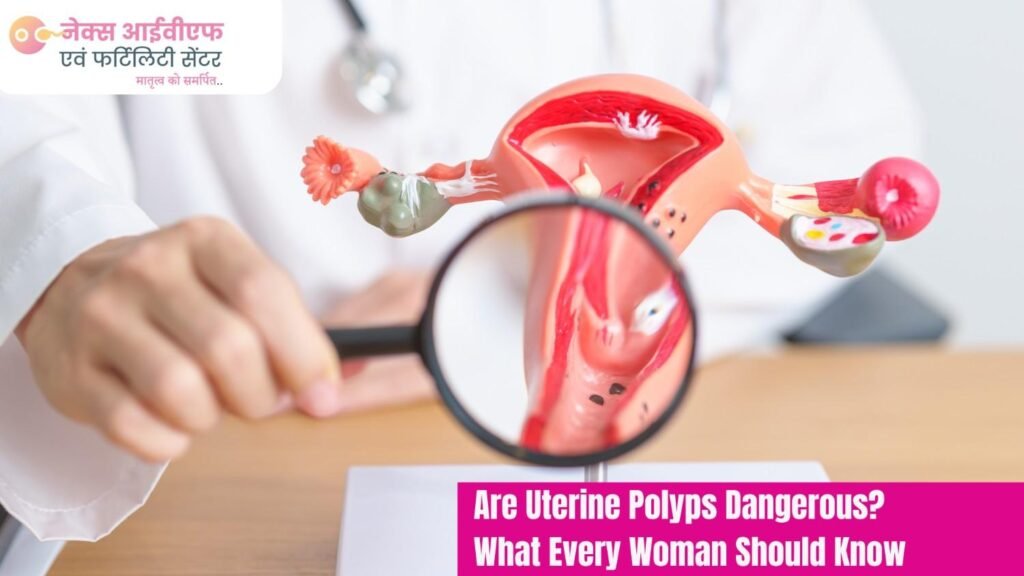
🧬 What Are Uterine Polyps?
Uterine polyps (also called endometrial polyps) are growths that develop in the lining of the uterus.
They may be:
- Small or large
- Single or multiple
- Harmless or symptomatic
Most polyps are non-cancerous, but they can still cause problems if left untreated.
⚠️ Are Uterine Polyps Dangerous?
In most cases, polyps are not dangerous, but they can become concerning depending on:
- Their size
- Their location
- Symptoms they cause
- Whether they affect fertility
- Rare chances of precancerous/cancerous changes
Polyps require proper evaluation because ignoring them may lead to complications.
🔍 Common Signs & Symptoms of Uterine Polyps
Many women have no symptoms, but some may experience:
- Irregular or unpredictable periods
- Heavy menstrual bleeding
- Spotting between periods
- Bleeding after intercourse
- Bleeding after menopause
- Difficulty conceiving
If these occur, a pelvic exam and ultrasound are recommended.
🧪 Why Do Polyps Develop?
The exact cause is unknown, but factors include:
- Hormonal imbalance (especially excess estrogen)
- Obesity
- High blood pressure
- Perimenopause or menopause
- Tamoxifen use (breast cancer treatment)
- Chronic endometrial inflammation
Women between 30–50 years are more likely to develop them.
🩺 How Uterine Polyps Affect Fertility
Polyps can interfere with pregnancy by:
- Blocking the cervix or fallopian tube opening
- Preventing embryo implantation
- Causing inflammation inside the uterus
- Leading to repeated implantation failure in IVF
Removing polyps often improves fertility outcomes.
🧫 How Are Uterine Polyps Diagnosed?
Doctors may use:
- Ultrasound (basic screening)
- Sonohysterography (SIS)
- Hysteroscopy (gold standard — allows both diagnosis and removal)
These methods give a clear picture of the uterine cavity.
💉 Treatment Options for Uterine Polyps
Treatment depends on symptoms and fertility goals:
1. Watchful Monitoring
Small, symptom-free polyps may be observed.
2. Medications
Hormonal medicines help temporarily but don’t cure polyps.
3. Hysteroscopic Polypectomy
A minimally invasive procedure to remove polyps safely — often the best option for fertility improvement.
4. IVF After Polyp Removal
For women facing infertility, removing polyps increases the chances of natural conception and IVF success.
👨⚕️ How Nex IVF and Fertility Centre Helps
At Nex IVF, we offer:
- Expert ultrasound and diagnostic evaluation
- Advanced hysteroscopy for precise polyp removal
- Personalized fertility planning
- Guidance for women preparing for pregnancy or IVF
- Supportive counselling at every step
Our goal is to ensure safe, effective, and comfortable treatment for every woman.
💬 Final Words
Uterine polyps aren’t always dangerous — but they should never be ignored.
Timely diagnosis and treatment can restore menstrual health, reduce discomfort, and significantly improve fertility.