 +91 988 988 5040
 care@nexivf.in
Ovarian Hyperstimulation Syndrome (OHSS) is a condition that can occur in some women undergoing fertility treatments, especially IVF. While most cases are mild and manageable, severe OHSS can be serious if not identified early.
Understanding OHSS—its causes, symptoms, and prevention—helps women feel informed and safe during fertility treatment.
At Nex IVF and Fertility Centre, patient safety and individualized care are always our top priorities.
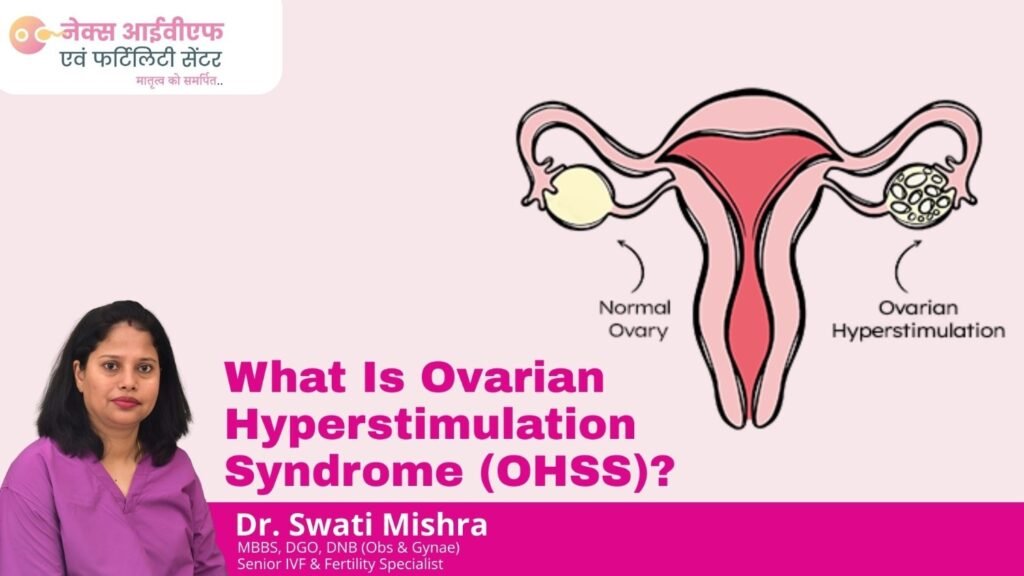
What Is Ovarian Hyperstimulation Syndrome (OHSS)?
OHSS occurs when the ovaries over-respond to fertility medications used to stimulate egg development. As a result, the ovaries become enlarged and fluid may leak into the abdomen or chest.
This reaction is linked to hormonal changes—particularly high levels of estrogen and hCG.
⚠️ Why Does OHSS Occur?
OHSS is most commonly associated with:
- Injectable fertility medications
- IVF stimulation protocols
- hCG trigger injections
- High estrogen levels
- Multiple developing follicles
It usually appears after ovulation induction or egg retrieval.
🔍 Who Is at Higher Risk of OHSS?
Some women have a higher likelihood of developing OHSS, including those with:
- PCOS
- Young age
- High AMH levels
- Large number of follicles
- Previous history of OHSS
- Rapid rise in estrogen levels
Identifying risk factors early allows doctors to adjust treatment safely.
🧪 Symptoms of Ovarian Hyperstimulation Syndrome
Mild to Moderate OHSS
- Abdominal bloating
- Mild abdominal pain
- Nausea or vomiting
- Weight gain
- Enlarged ovaries
Severe OHSS (Medical Emergency)
- Severe abdominal pain
- Rapid weight gain (more than 2–3 kg in a few days)
- Severe bloating
- Difficulty breathing
- Reduced urine output
- Dizziness or weakness
Any severe symptom requires immediate medical attention.
🩺 How Is OHSS Diagnosed?
Doctors may use:
- Clinical symptom assessment
- Ultrasound to check ovarian size and fluid
- Blood tests to monitor hormone levels
- Weight and urine output monitoring
Early diagnosis helps prevent complications.
🛡️ How Is OHSS Treated?
Mild OHSS
- Rest and hydration
- Pain relief medications
- Close monitoring
- Avoid strenuous activity
Moderate to Severe OHSS
- Hospital observation
- IV fluids and electrolyte balance
- Blood-thinning medication (to prevent clots)
- Fluid drainage if required
- Delay or freeze embryo transfer
Most cases resolve on their own with proper care.
🌱 Can OHSS Be Prevented?
Yes—modern fertility treatments focus strongly on prevention.
Preventive Measures Include:
- Individualized stimulation protocols
- Lower-dose fertility medications
- GnRH agonist trigger instead of hCG
- “Freeze-all” embryo strategy
- Careful hormonal monitoring
- Extra caution in PCOS patients
At Nex IVF, prevention is a key part of treatment planning.
👶 Can Pregnancy Occur After OHSS?
Yes.
Many women go on to have healthy pregnancies after recovering from OHSS. In fact, freezing embryos and transferring them in a later cycle often improves safety and success rates.
Proper recovery before pregnancy is essential.
👨⚕️ How Nex IVF and Fertility Centre Ensures Safety
We offer:
- Personalized IVF stimulation plans
- Advanced hormonal monitoring
- Risk assessment for OHSS
- Safe egg retrieval protocols
- Freeze-all strategies when needed
- 24/7 patient support and guidance
Our team prioritizes successful outcomes without compromising safety.
💬 Final Words
Ovarian Hyperstimulation Syndrome can sound alarming—but with modern fertility care, it is largely preventable and highly manageable.
The key lies in early identification, expert monitoring, and personalized treatment.