 +91 988 988 5040
 care@nexivf.in
Adenomyosis is a common yet often underdiagnosed gynecological condition that can significantly affect a woman’s quality of life and fertility. Many women live with painful periods, heavy bleeding, or difficulty conceiving for years without realizing adenomyosis may be the underlying cause.
Understanding the symptoms, causes, and available treatment options is essential for early diagnosis and effective management. At Nex IVF and Fertility Centre, we focus on accurate diagnosis and personalized care to help women manage adenomyosis and achieve their reproductive goals.
What Is Adenomyosis?
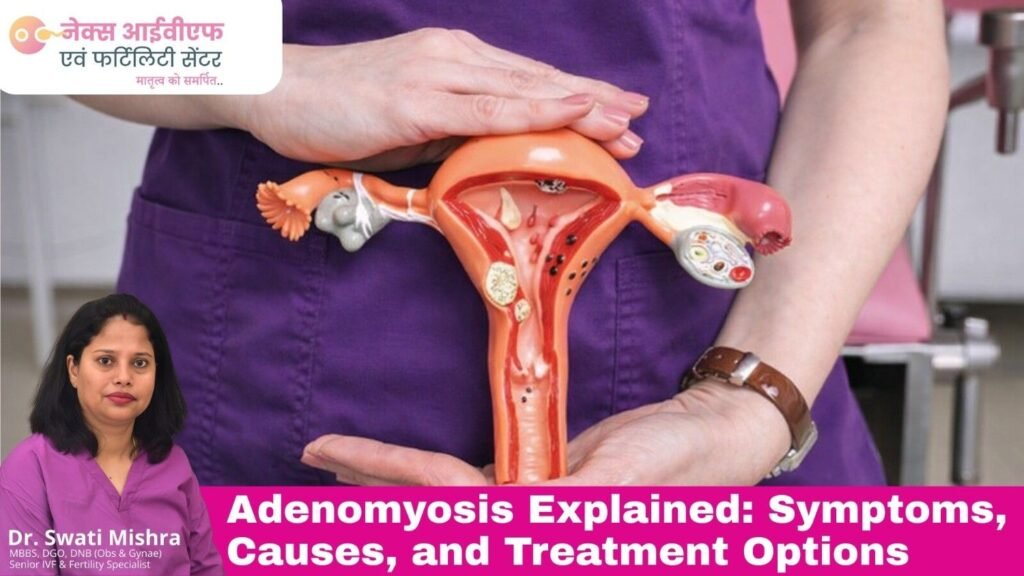
Adenomyosis occurs when the tissue that normally lines the uterus (endometrium) grows into the muscular wall of the uterus (myometrium). This causes the uterus to become enlarged, tender, and painful.
Unlike fibroids, adenomyosis is a diffuse condition, meaning it spreads within the uterine muscle rather than forming a single, distinct growth.
Symptoms of Adenomyosis
Symptoms can vary from mild to severe. Some women may have no symptoms at all, while others experience significant discomfort.
Common symptoms include:
- Heavy or prolonged menstrual bleeding
- Severe menstrual cramps that worsen over time
- Chronic pelvic pain
- Pain during intercourse
- Bloating or pressure in the lower abdomen
- Enlarged or tender uterus
- Fatigue due to anemia
- Difficulty conceiving or repeated pregnancy loss
Symptoms often intensify during the late reproductive years.
Causes and Risk Factors of Adenomyosis
The exact cause of adenomyosis is not fully understood, but several factors are believed to contribute:
- Invasion of endometrial tissue into the uterine muscle
- Uterine inflammation following childbirth
- Previous uterine surgeries such as cesarean section or fibroid removal
- Hormonal imbalance, especially excess estrogen
- Increasing age, particularly between 35 and 50 years
- Multiple pregnancies
Hormonal stimulation plays a key role in the progression of the condition.
How Adenomyosis Affects Fertility
Adenomyosis can interfere with fertility in several ways:
- Altered uterine contractions affecting sperm movement
- Inflammation within the uterus reducing implantation chances
- Thickened uterine wall affecting embryo attachment
- Increased risk of miscarriage
While natural conception is still possible, many women with adenomyosis may require fertility assistance.
Diagnosis of Adenomyosis
Diagnosis typically involves a combination of clinical evaluation and imaging:
- Transvaginal ultrasound to assess uterine structure
- MRI for detailed imaging and confirmation
- Pelvic examination revealing an enlarged, tender uterus
Early and accurate diagnosis helps in choosing the most appropriate treatment plan.
Treatment Options for Adenomyosis
Treatment depends on the severity of symptoms, age, and fertility goals.
Medical Management
- Hormonal therapies to control bleeding and pain
- Progesterone-based treatments or hormonal IUDs
- Pain-relieving medications
These treatments help manage symptoms but do not cure the condition.
Surgical Options
- Conservative surgery in selected cases
- Hysterectomy (uterus removal) for severe symptoms when fertility is no longer desired
Fertility-Focused Treatment
- IVF is often recommended when adenomyosis affects implantation
- Pre-IVF medical treatment to reduce inflammation and improve outcomes
A personalized approach provides the best results.
Living With Adenomyosis
Lifestyle changes can help manage symptoms alongside medical treatment:
- Maintaining a healthy weight
- Managing stress levels
- Treating anemia caused by heavy bleeding
- Regular follow-ups with a gynecologist or fertility specialist
With proper care, many women lead healthy, active lives despite adenomyosis.
How Nex IVF and Fertility Centre Supports Women With Adenomyosis
At Nex IVF and Fertility Centre, we provide:
- Advanced imaging for accurate diagnosis
- Individualized treatment planning
- Fertility-preserving options wherever possible
- IVF strategies tailored for adenomyosis patients
- Compassionate counselling and long-term support
Our focus is to relieve symptoms while protecting fertility and overall well-being.
Final Words
Adenomyosis can be challenging, but it is manageable with timely diagnosis and the right treatment approach. If you experience heavy, painful periods or face difficulty conceiving, seeking expert evaluation can make a significant difference.