 +91 988 988 5040
 care@nexivf.in
One of the most common questions couples ask when facing fertility challenges is, “When should we start IVF?” The answer varies from person to person and depends on several important factors, including age, reproductive health, medical history, and the cause of infertility.
While IVF (In Vitro Fertilization) has helped millions of couples achieve parenthood, starting treatment at the right time can significantly improve the chances of success. Understanding the factors that influence IVF outcomes can help couples make informed decisions about their fertility journey.
At NEX IVF and Fertility Centre, fertility specialists evaluate each couple individually to determine the most appropriate time to begin IVF treatment.
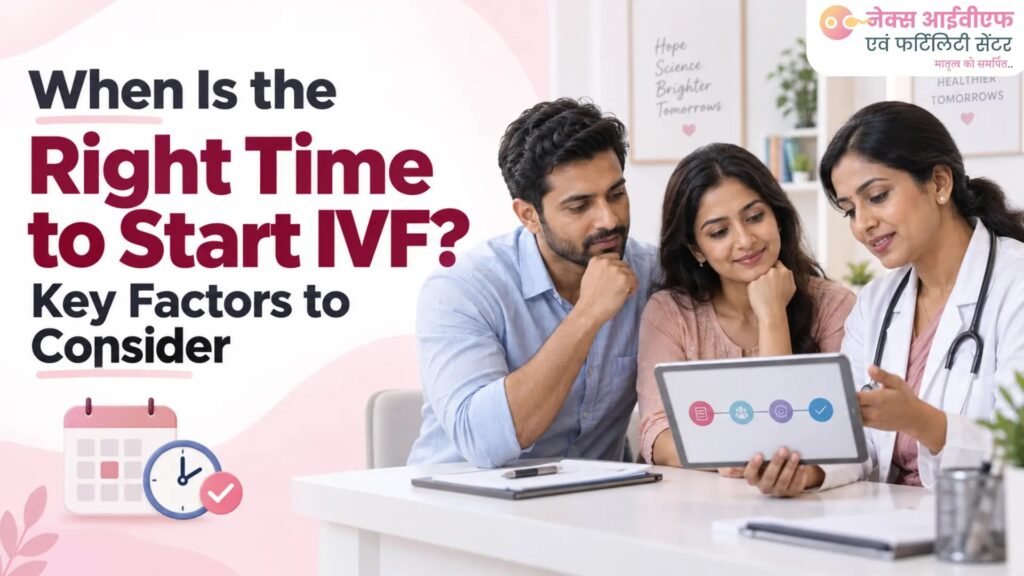
Why Timing Matters in IVF
Fertility naturally changes with age, and delaying treatment can sometimes reduce the chances of success. Early fertility evaluation allows specialists to identify potential challenges and recommend the most effective treatment strategy.
Starting IVF at the right time can:
- Improve pregnancy chances
- Increase the likelihood of obtaining healthy embryos
- Reduce delays caused by declining fertility
- Help couples plan their family goals more effectively
Age: One of the Most Important Factors
Women Under 35
Women under 35 generally have:
- Better egg quality
- Higher ovarian reserve
- Better IVF success rates
If pregnancy does not occur after one year of trying, fertility evaluation is usually recommended.
Women Aged 35–40
Fertility begins to decline more noticeably after 35.
Women in this age group should consider fertility assessment if they have been trying to conceive for six months without success.
Women Over 40
After 40, both egg quantity and quality decline significantly. Starting IVF earlier can improve the chances of achieving pregnancy before fertility decreases further.
Ovarian Reserve and Egg Quality
Age alone does not determine fertility. Some younger women may have a reduced ovarian reserve, while some older women may still have good reproductive potential.
Important tests include:
- AMH (Anti-Müllerian Hormone)
- Antral Follicle Count (AFC)
- Hormonal evaluation
These tests help fertility specialists determine the urgency of treatment.
Underlying Fertility Conditions
Certain medical conditions may indicate the need for earlier IVF treatment.
Blocked Fallopian Tubes
Natural conception may not be possible when both tubes are blocked.
Severe Endometriosis
Advanced endometriosis can affect egg quality, ovarian reserve, and implantation.
Low Ovarian Reserve
Women with diminished ovarian reserve may benefit from starting IVF sooner rather than later.
Male Factor Infertility
Severe sperm abnormalities may make IVF or ICSI the most effective treatment option.
Previous Fertility Treatment History
Couples who have undergone multiple unsuccessful fertility treatments may be advised to consider IVF.
This includes:
- Repeated failed ovulation induction cycles
- Multiple unsuccessful IUI cycles
- Long-standing unexplained infertility
In such cases, IVF often provides a higher chance of pregnancy.
Overall Health and Lifestyle
Good overall health can positively influence IVF outcomes.
Factors that support fertility include:
- Maintaining a healthy weight
- Balanced nutrition
- Regular exercise
- Avoiding smoking and excessive alcohol
- Managing stress levels
Optimizing health before IVF can improve treatment response and pregnancy outcomes.
Emotional Readiness Matters Too
IVF is not only a medical journey but also an emotional one. Couples should feel informed, supported, and prepared before beginning treatment.
Discussing expectations, treatment goals, and concerns with fertility specialists can help create a more positive experience.
Signs It May Be Time to Consider IVF
You may want to discuss IVF with a fertility specialist if:
- You are under 35 and have been trying for over a year
- You are over 35 and have been trying for more than six months
- You have blocked fallopian tubes
- You have severe male infertility
- You have endometriosis or low ovarian reserve
- Previous fertility treatments have failed
Early evaluation can prevent unnecessary delays and improve treatment planning.
Final Words
The best time to start IVF depends on several factors, including age, ovarian reserve, reproductive health, and previous fertility history. While every couple’s situation is unique, seeking fertility advice early can help identify the most effective path toward pregnancy.