 +91 988 988 5040
 care@nexivf.in
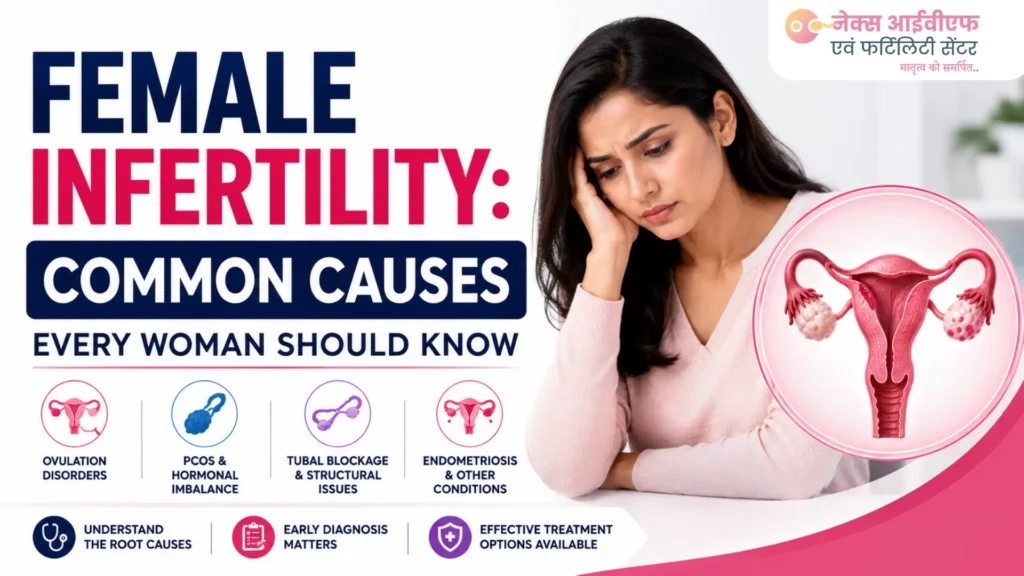
Female infertility is a common reproductive health concern that affects millions of women worldwide. While many couples expect pregnancy to happen naturally, some may face challenges conceiving despite regular, unprotected intercourse. Understanding the causes of female infertility is the first step toward finding the right treatment and improving the chances of pregnancy.
The good news is that many causes of infertility can be diagnosed and treated effectively with modern fertility care. At NEX IVF and Fertility Centre, comprehensive fertility evaluations help identify the underlying reasons for infertility and guide women toward personalized treatment solutions.
What Is Female Infertility?
Female infertility refers to the inability to achieve pregnancy after:
- One year of regular, unprotected intercourse for women under 35
- Six months of regular, unprotected intercourse for women over 35
Infertility can result from problems with ovulation, the fallopian tubes, the uterus, hormone levels, or age-related fertility decline.
Top Causes of Female Infertility
1. Ovulation Disorders
Ovulation problems are among the most common causes of female infertility.
When ovulation does not occur regularly, the ovaries may not release an egg each month, making conception difficult.
Common ovulation disorders include:
- Polycystic Ovary Syndrome (PCOS)
- Thyroid disorders
- Hormonal imbalances
- Premature ovarian insufficiency
Irregular or absent periods may be a sign of ovulation problems.
2. Polycystic Ovary Syndrome (PCOS)
PCOS is one of the leading causes of infertility in women.
It can cause:
- Irregular menstrual cycles
- Hormonal imbalance
- Insulin resistance
- Difficulty with ovulation
With proper treatment and lifestyle changes, many women with PCOS successfully conceive.
3. Blocked Fallopian Tubes
The fallopian tubes play a crucial role in fertilization by allowing the sperm and egg to meet.
Blockages may result from:
- Pelvic infections
- Previous surgeries
- Endometriosis
- Pelvic inflammatory disease (PID)
Blocked tubes can prevent natural conception and may require advanced fertility treatments such as IVF.
4. Endometriosis
Endometriosis occurs when tissue similar to the uterine lining grows outside the uterus.
This condition can affect fertility by:
- Causing inflammation
- Damaging the ovaries
- Affecting egg quality
- Creating scar tissue around reproductive organs
The severity of fertility problems varies among women with endometriosis.
5. Diminished Ovarian Reserve
Women are born with a fixed number of eggs, and this reserve naturally declines with age.
Low ovarian reserve means:
- Fewer eggs are available
- Egg quality may be reduced
- Pregnancy may become more challenging
Testing such as AMH and Antral Follicle Count can help assess ovarian reserve.
6. Uterine Abnormalities
Certain conditions affecting the uterus may interfere with implantation or pregnancy.
Examples include:
- Uterine fibroids
- Endometrial polyps
- Congenital uterine abnormalities
- Adhesions within the uterus
Early diagnosis can help improve fertility outcomes.
7. Age-Related Fertility Decline
Age is one of the most significant factors affecting female fertility.
After the age of 35:
- Egg quantity decreases
- Egg quality declines
- Risk of miscarriage increases
Women planning pregnancy later in life may benefit from early fertility evaluation.
8. Hormonal Imbalances
Hormones regulate ovulation, menstrual cycles, and reproductive health.
Conditions affecting hormone levels include:
- Thyroid disorders
- Elevated prolactin levels
- Insulin resistance
- Pituitary gland disorders
Proper treatment often restores reproductive function.
9. Lifestyle Factors
Lifestyle habits can influence fertility significantly.
Common factors include:
- Smoking
- Excessive alcohol consumption
- Obesity
- Poor nutrition
- Chronic stress
- Lack of physical activity
Healthy lifestyle choices can positively impact fertility and pregnancy outcomes.
Symptoms That May Indicate Female Infertility
Women experiencing infertility may notice:
- Irregular menstrual cycles
- Absent periods
- Painful periods
- Pelvic pain
- Hormonal imbalance symptoms
- Difficulty conceiving after months of trying
Consulting a fertility specialist can help identify the underlying cause.
How Is Female Infertility Diagnosed?
A fertility evaluation may include:
Hormonal Testing
To assess reproductive hormone levels.
Ultrasound Examination
To evaluate the ovaries and uterus.
Ovulation Assessment
To determine whether ovulation is occurring regularly.
Tubal Patency Testing
To check whether the fallopian tubes are open.
Ovarian Reserve Testing
Including AMH and Antral Follicle Count.
These tests help create a personalized fertility treatment plan.
Treatment Options for Female Infertility
Treatment depends on the underlying cause and may include:
Lifestyle Modifications
- Healthy diet
- Weight management
- Regular exercise
- Stress reduction
Medication
To regulate hormones and stimulate ovulation.
IUI (Intrauterine Insemination)
May be recommended in selected cases.
IVF (In Vitro Fertilization)
Often recommended for more complex fertility challenges, including blocked tubes, severe endometriosis, or low ovarian reserve.
Final Words
Female infertility can result from a variety of factors, including ovulation disorders, PCOS, endometriosis, blocked fallopian tubes, hormonal imbalances, and age-related fertility decline. Understanding these causes is the first step toward finding the right treatment and improving the chances of pregnancy.