 +91 988 988 5040
 care@nexivf.in
The endometrium is the inner lining of the uterus that plays a crucial role in menstruation, implantation, and pregnancy. For a successful pregnancy to occur, the embryo must implant into a healthy and receptive endometrial lining. This makes endometrial thickness one of the most important factors evaluated during fertility assessments and fertility treatments.
If the endometrial lining is too thin or unusually thick, it may affect implantation and reduce the chances of conception. Understanding normal endometrial thickness, how it is measured, and available treatment options can help women better understand their reproductive health.
At NEX IVF and Fertility Centre, endometrial assessment is an important part of fertility evaluation and treatment planning.
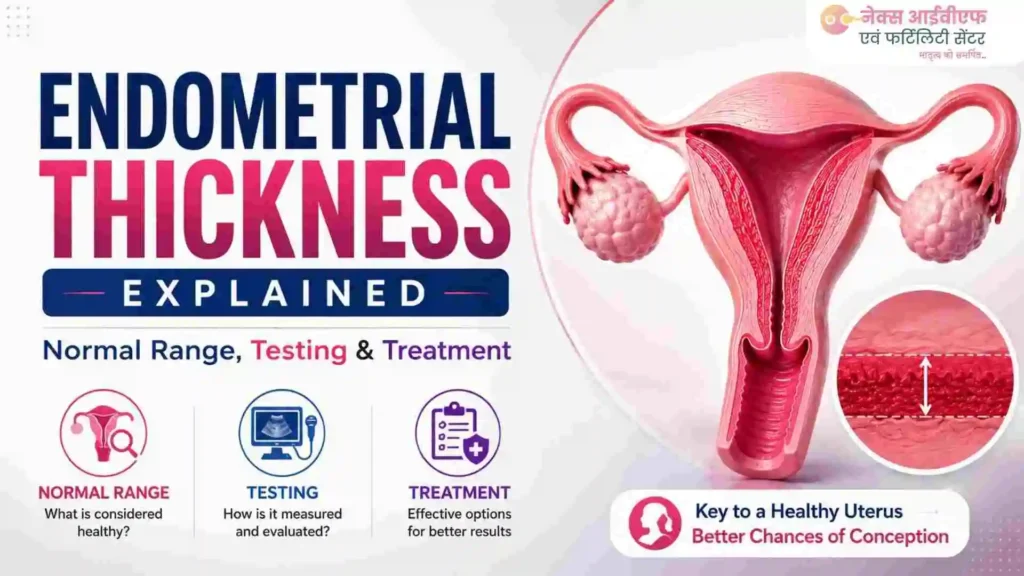
What Is Endometrial Thickness?
Endometrial thickness refers to the measurement of the uterine lining. This lining changes throughout the menstrual cycle under the influence of hormones, primarily estrogen and progesterone.
The endometrium:
- Thickens in preparation for pregnancy
- Supports embryo implantation
- Provides nourishment to the developing embryo in the early stages of pregnancy
A healthy endometrium is essential for successful conception and pregnancy.
What Is the Normal Endometrial Thickness?
The thickness of the endometrium varies during different stages of the menstrual cycle.
During Menstruation
- Approximately 2–4 mm
Early Proliferative Phase
- Approximately 5–7 mm
Late Proliferative Phase
- Approximately 7–11 mm
Ovulation Period
- Approximately 8–14 mm
Secretory Phase
- Approximately 10–16 mm
For fertility and embryo implantation, an endometrial thickness of around 7–14 mm is generally considered favorable.
Why Is Endometrial Thickness Important for Fertility?
The embryo needs a healthy uterine lining to implant successfully.
An optimal endometrial lining:
- Improves implantation chances
- Supports embryo development
- Enhances pregnancy outcomes
- Increases IVF success rates
Both excessively thin and excessively thick endometrium can affect fertility.
What Causes a Thin Endometrium?
A thin uterine lining may reduce the chances of implantation.
Common causes include:
Low Estrogen Levels
Insufficient estrogen can prevent proper endometrial growth.
Poor Blood Flow to the Uterus
Reduced blood circulation may affect lining development.
Previous Uterine Procedures
Certain surgical procedures may damage the uterine lining.
Hormonal Imbalances
Conditions affecting reproductive hormones may lead to inadequate endometrial growth.
Chronic Infections
Long-term uterine infections can affect endometrial health.
What Causes an Abnormally Thick Endometrium?
An unusually thick endometrium may be associated with:
- Endometrial hyperplasia
- Hormonal imbalance
- Polycystic Ovary Syndrome (PCOS)
- Obesity
- Prolonged estrogen exposure
Further evaluation may be necessary to determine the underlying cause.
How Is Endometrial Thickness Measured?
The most common method is a transvaginal ultrasound scan.
During the scan:
- The thickness of the uterine lining is measured
- The appearance and structure of the endometrium are assessed
- Doctors evaluate whether the lining is suitable for implantation
This procedure is simple, safe, and painless.
When Is Endometrial Thickness Evaluated?
Doctors commonly assess endometrial thickness during:
- Fertility evaluations
- Ovulation monitoring
- IVF treatment cycles
- Investigation of abnormal uterine bleeding
- Recurrent implantation failure assessments
Monitoring the lining helps guide treatment decisions.
Treatment Options for Thin Endometrium
Treatment depends on the underlying cause.
Hormonal Therapy
Estrogen supplementation may help improve endometrial growth.
Improving Blood Flow
Lifestyle changes and certain medications may enhance uterine blood circulation.
Treating Underlying Conditions
Managing infections or hormonal disorders can improve endometrial health.
Fertility Treatment Optimization
During IVF cycles, doctors may adjust medication protocols to improve endometrial development.
Treatment for Thick Endometrium
Management may include:
- Hormonal regulation
- Treatment of PCOS
- Endometrial biopsy when indicated
- Surgical management for polyps or hyperplasia
The treatment plan depends on the cause and the patient’s reproductive goals.
Can Pregnancy Occur with Abnormal Endometrial Thickness?
Yes, pregnancy is still possible in many cases.
However, addressing endometrial abnormalities often improves:
- Implantation rates
- IVF success rates
- Pregnancy outcomes
Proper diagnosis and treatment can significantly enhance fertility potential.
When Should You Consult a Fertility Specialist?
You should consider evaluation if:
- You have difficulty conceiving
- You have recurrent implantation failure
- You experience abnormal menstrual bleeding
- You have a history of hormonal disorders
- You are undergoing IVF treatment
At NEX IVF and Fertility Centre, advanced fertility assessments help identify endometrial concerns and guide personalized treatment strategies.
Final Words
Endometrial thickness is an important indicator of uterine health and fertility potential. A healthy uterine lining supports embryo implantation and increases the chances of a successful pregnancy. Both thin and thick endometrial linings can affect fertility, but many underlying causes can be diagnosed and treated effectively.