 +91 988 988 5040
 care@nexivf.in
When couples try to conceive, most focus goes toward egg quality, ovulation, hormones, or sperm health. But one important element often gets ignored — the cervix. At Nex IVF and Fertility Centre, specialists often explain that cervical health plays a direct and crucial role in both natural pregnancy and IVF success.
A healthy cervix helps sperm travel smoothly, supports implantation, and creates the right environment for conception.
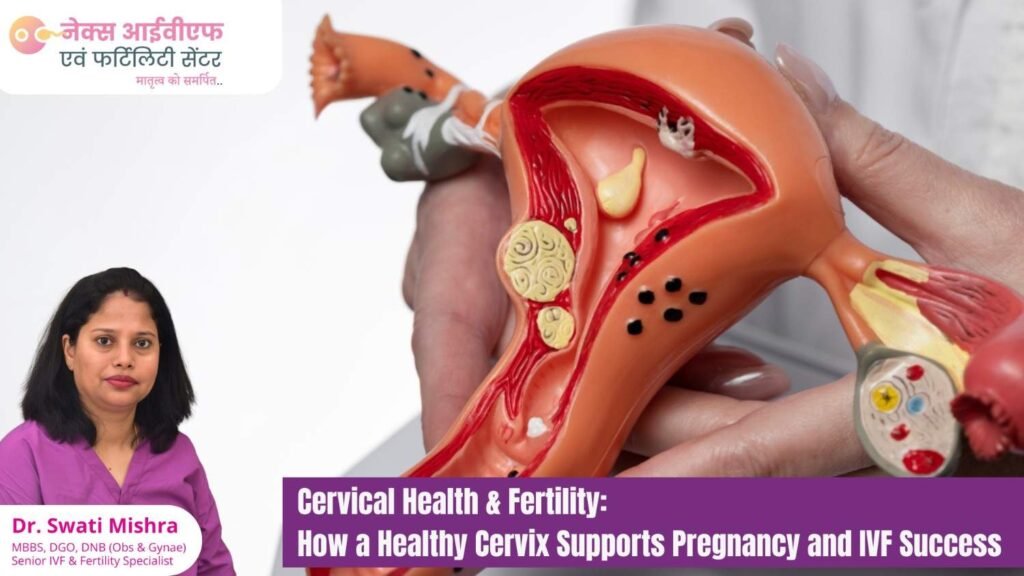
What is the Cervix? (Simple Explanation)
The cervix is the lower part of the uterus — a natural gateway between the vagina and uterine cavity.
It influences:
- How sperm enters the uterus
- How cervical mucus protects sperm
- How embryo transfer is performed during IVF
At Nex IVF, doctors carefully evaluate the cervix because its condition can directly affect treatment outcomes.
How Cervical Health Affects Natural Pregnancy
1. Cervical Mucus Helps Sperm Reach the Egg
During ovulation, the cervix produces thin, stretchy, and sperm-friendly mucus.
If the mucus is too thick, too acidic, or very low in quantity, sperm cannot survive long enough to reach the egg.
This is why Nex IVF experts often assess cervical mucus patterns when couples struggle to conceive naturally.
2. Cervical Infections Reduce Fertility
Infections like HPV, chlamydia, or chronic cervicitis inflame the cervix and make sperm entry difficult.
Treating these issues early improves conception chances.
3. Cervical Stenosis (Narrow Cervix)
If the cervix becomes unusually tight or narrow, sperm cannot pass through easily, reducing natural pregnancy chances.
Why Cervical Health Matters Even More in IVF
During IVF, two steps directly involve the cervix:
1. Before Egg Retrieval
Doctors at Nex IVF check whether the cervix is normal in shape and flexibility.
A blocked or scarred cervix can complicate the procedure.
2. During Embryo Transfer
A soft, healthy cervix allows the embryo transfer catheter to pass gently into the uterus.
However, if there is:
- inflammation
- scarring
- narrowing
- infection
the catheter may not pass smoothly, and this can reduce implantation success.
A healthy cervix is one of the many factors that increase IVF success rates at Nex IVF and Fertility Centre.
Common Cervical Problems That Affect Fertility
- Thick or hostile cervical mucus
- Cervical polyps
- Chronic cervicitis
- HPV infection
- Cervical stenosis
- Scarring from previous surgery
- Acidic cervical environment
These conditions can interfere with sperm movement and implantation, both naturally and during IVF.
How to Improve Cervical Health Naturally
1. Regular Screening (Pap Smear + HPV Test)
Nex IVF doctors recommend routine cervical screening to catch infections or structural problems early.
2. Treat Infections Quickly
Ignoring symptoms like unusual discharge or pelvic pain may worsen cervical issues.
3. Maintain a Healthy Lifestyle
- Stop smoking
- Eat antioxidant-rich foods
- Stay hydrated
- Manage stress
These habits support healthy cervical mucus.
4. Follow Safe Sexual Practices
Protected intercourse reduces the risk of sexually transmitted infections.
5. Medical Management When Needed
If the cervix is too tight, procedures like cervical dilation can help improve fertility and IVF outcomes.
When to Consult Nex IVF and Fertility Centre
You should seek expert advice if you experience:
- Painful intercourse
- Repeated infections
- Unusual discharge
- Difficulty conceiving
- Previous cervical surgeries
- Difficult embryo transfer in past IVF cycles
The specialists at Nex IVF and Fertility Centre provide thorough cervical evaluation and personalized treatment plans to support pregnancy success.
Conclusion
Cervical health is an essential but often overlooked part of fertility. Whether you are trying naturally or planning IVF, a healthy cervix supports sperm movement, improves implantation, and boosts your overall pregnancy chances.