 +91 988 988 5040
 care@nexivf.in
An isthmocele, also known as a Cesarean scar defect, is a small pouch-like indentation that forms at the site of a previous C-section incision. Most women never notice it—but for some, an untreated isthmocele can interfere with menstrual health, fertility, and even future pregnancy outcomes.
If you’ve had a C-section and are planning to conceive again, understanding how an isthmocele affects your reproductive journey is extremely important.
At Nex IVF and Fertility Centre, we help women diagnose and manage isthmocele with advanced imaging, expert treatment, and fertility-focused care.
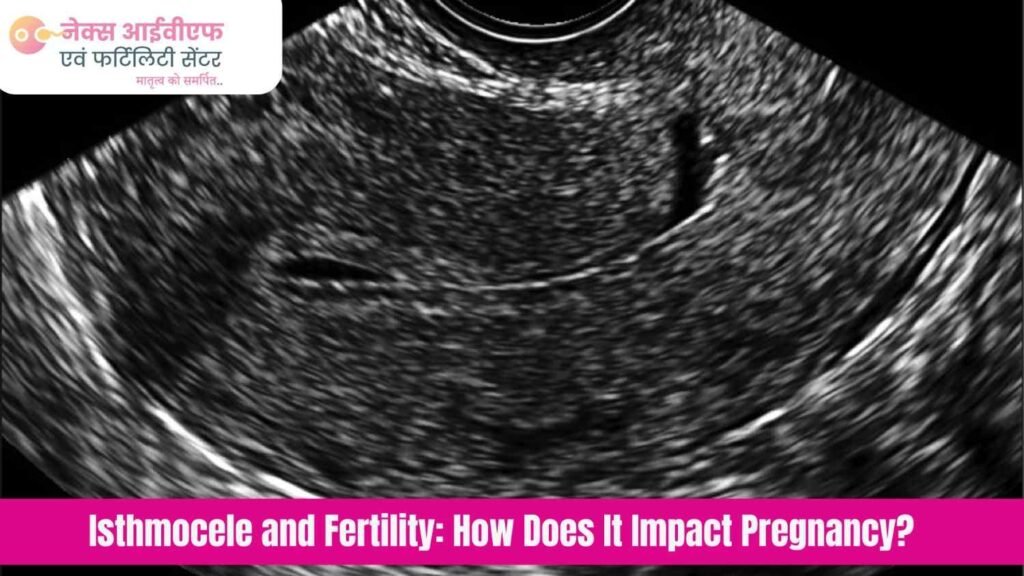
🧬 What Is an Isthmocele?
An isthmocele is a defect or niche in the lower uterine segment where the C-section incision did not heal completely or correctly.
It can collect menstrual blood and cause irregular uterine function.
Common Causes Include:
- Healing complications after C-section
- Multiple Cesarean deliveries
- Short interval between pregnancies
- Surgical technique or incision depth
- Infection or poor healing conditions
Many women don’t know they have it until they experience symptoms or fertility issues.
⚠️ Symptoms of Isthmocele
Some women may be asymptomatic, but others experience:
- Spotting before or after periods
- Heavy or prolonged menstruation
- Pelvic pain
- Pain during intercourse
- Difficulty conceiving
- Chronic inflammation of the uterus
These symptoms often mimic other conditions, making proper diagnosis essential.
🔍 How Does Isthmocele Affect Fertility?
An isthmocele can interfere with fertility in several ways:
1️⃣ Blood Accumulation in the Scar
Trapped blood irritates the uterus, affecting menstrual flow and creating inflammation that disrupts embryo implantation.
2️⃣ Impaired Uterine Environment
The niche alters the uterine shape, reducing the chances of an embryo attaching successfully.
3️⃣ Interference With Sperm Movement
In some cases, fluid in the defect can obstruct sperm from reaching the egg.
4️⃣ Chronic Inflammation
Persistent inflammation makes it difficult for embryos to implant or survive.
5️⃣ Irregular Ovulation & Hormonal Imbalance
The chronic spotting and irregular bleeding may signal hormonal cyclic issues that indirectly affect fertility.
🤰 How Does Isthmocele Affect Pregnancy?
If conception occurs, an untreated isthmocele may increase risks such as:
- Scar ectopic pregnancy
- Miscarriage
- Placenta accreta (placenta abnormally attached to scar)
- Preterm labor
- Uterine rupture (rare but serious)
Proper management before pregnancy significantly reduces these risks.
🧪 How Is Isthmocele Diagnosed?
Doctors may use:
- Transvaginal ultrasound
- Saline Infusion Sonography (SIS)
- Hysteroscopy
- MRI (in complex cases)
SIS and hysteroscopy offer the clearest view of the niche and guide treatment.
🩺 Treatment Options to Improve Fertility
1️⃣ Medical Management
For women with mild symptoms, medication may help regulate cycles and reduce spotting—but it does not repair the scar.
2️⃣ Hysteroscopic Isthmocele Repair
A minimally invasive procedure to smooth the defect and restore normal uterine function.
It significantly improves fertility outcomes.
3️⃣ Laparoscopic Repair
Recommended for deeper defects or women planning future pregnancies.
4️⃣ IVF Treatment
If uterine repair doesn’t resolve fertility challenges, IVF may help bypass implantation issues — especially when combined with surgical correction.
🌱 Can You Get Pregnant After Isthmocele Treatment?
Yes!
Most women experience:
- Improved menstrual health
- Higher chances of natural conception
- Reduced miscarriage risk
- Better IVF success rates
- Safer pregnancies with lower complications
Treating the niche restores the uterus to a healthier condition for pregnancy.
👨⚕️ How Nex IVF and Fertility Centre Supports Women With Isthmocele
We offer:
- Expert ultrasound and SIS diagnosis
- Advanced hysteroscopic and laparoscopic repair
- Fertility-preserving treatment plans
- IVF support for women with scar-related infertility
- Continuous monitoring during pregnancy
- Compassionate counselling at every stage
Our team focuses on restoring uterine health while optimizing your chances of a successful and safe pregnancy.