 +91 988 988 5040
 care@nexivf.in
Polycystic Ovary Syndrome (PCOS) and Polycystic Ovarian Disease (PCOD) are among the most common hormonal conditions affecting women of reproductive age. Many women diagnosed with PCOS or PCOD worry about their ability to conceive and often ask the question: Can PCOS or PCOD lead to infertility?
The answer is that while PCOS and PCOD can make it more difficult to get pregnant, they do not necessarily mean infertility. With early diagnosis, lifestyle changes, and appropriate fertility treatment, many women with PCOS or PCOD successfully achieve pregnancy.
At NEX IVF and Fertility Centre, specialists help women understand the impact of PCOS on fertility and provide personalized treatment plans to improve their chances of conception.
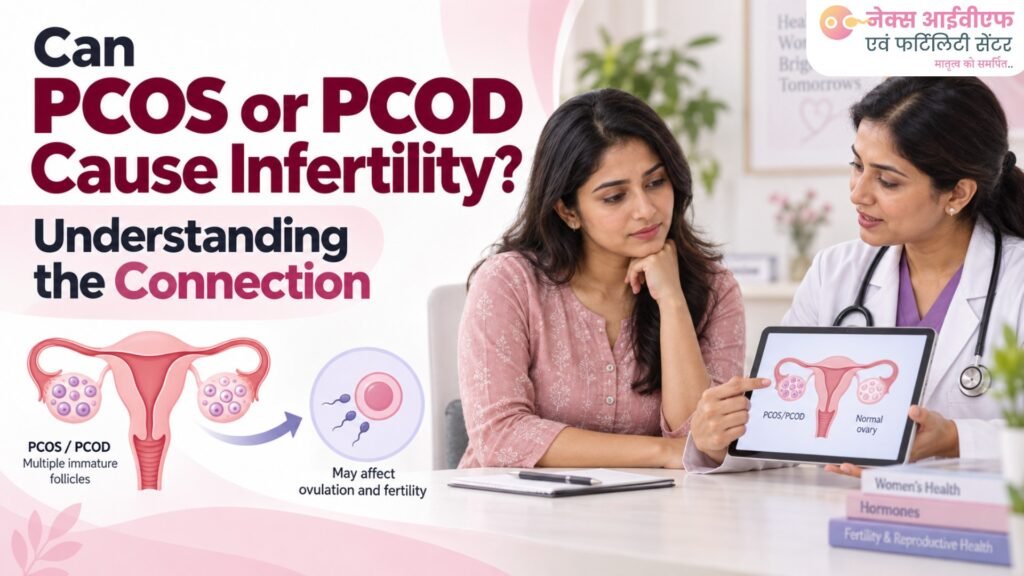
What Are PCOS and PCOD?
PCOS and PCOD are hormonal disorders that affect the normal functioning of the ovaries.
Women with these conditions may experience:
- Irregular menstrual cycles
- Hormonal imbalance
- Multiple small follicles in the ovaries
- Difficulty with ovulation
- Weight gain and insulin resistance
Although the terms PCOS and PCOD are often used interchangeably, both conditions can affect reproductive health and fertility.
How Does PCOS/PCOD Affect Fertility?
The primary reason PCOS and PCOD affect fertility is because they interfere with ovulation.
1. Irregular Ovulation
Many women with PCOS do not release an egg regularly each month.
Without ovulation:
- Fertilization cannot occur
- Pregnancy becomes more difficult
Irregular ovulation is one of the leading causes of infertility associated with PCOS.
2. Hormonal Imbalance
Women with PCOS often have elevated androgen (male hormone) levels.
This hormonal imbalance can:
- Disrupt the menstrual cycle
- Affect egg maturation
- Reduce the chances of natural conception
3. Insulin Resistance
Many women with PCOS have insulin resistance, which affects hormone regulation and ovulation.
High insulin levels can:
- Increase androgen production
- Worsen menstrual irregularities
- Affect egg quality
Managing insulin resistance often improves fertility outcomes.
4. Weight-Related Fertility Challenges
PCOS is frequently associated with weight gain and obesity.
Excess weight may:
- Worsen hormonal imbalance
- Affect ovulation
- Reduce fertility treatment success rates
Weight management often improves reproductive health significantly.
Does PCOS Always Cause Infertility?
No.
Many women with PCOS conceive naturally and have healthy pregnancies.
The severity of fertility challenges varies depending on:
- Age
- Ovulation patterns
- Weight and metabolic health
- Presence of other fertility factors
With proper management, the majority of women with PCOS can achieve pregnancy.
Common Signs of PCOS-Related Fertility Problems
Women may notice:
- Irregular or absent periods
- Difficulty tracking ovulation
- Delayed conception
- Recurrent fertility challenges
- Symptoms of hormonal imbalance
If these symptoms are present, fertility evaluation may be helpful.
How Is PCOS-Related Infertility Diagnosed?
Doctors may recommend:
- Hormonal blood tests
- Ultrasound examination
- Ovulation assessment
- Insulin resistance evaluation
- Fertility testing for both partners
A complete evaluation helps identify the best treatment approach.
Treatment Options to Improve Fertility in PCOS
Lifestyle Modifications
Healthy lifestyle changes often improve fertility significantly.
These include:
- Weight management
- Balanced nutrition
- Regular exercise
- Stress reduction
Even a small reduction in body weight can help restore ovulation.
Ovulation Induction
Medications may be prescribed to stimulate ovulation and improve the chances of conception.
IUI Treatment
Intrauterine Insemination (IUI) may be recommended for selected couples when ovulation is successfully induced.
IVF Treatment
For women who do not conceive with simpler treatments, IVF may offer excellent success rates.
IVF can be especially beneficial for women with:
- Long-standing infertility
- Additional fertility factors
- Repeated treatment failures
Can Women with PCOS Have Healthy Pregnancies?
Yes.
Many women with PCOS successfully conceive and deliver healthy babies. Proper monitoring during pregnancy helps manage potential risks such as:
- Gestational diabetes
- High blood pressure
- Pregnancy complications
Early prenatal care is essential.
Final Words
PCOS and PCOD can affect fertility, but they do not automatically mean infertility. Most women with these conditions can achieve pregnancy with the right combination of lifestyle changes, medical support, and fertility treatment.